Showing posts with label 1900s. Show all posts

Tuesday, February 14, 2012

Gloria Swanson: Life in Key West (1909)


Queen Kelly - Gloria Swanson and Walter Byron

These days I am reading this great book “Swanson on Swanson”, an autobiography of the great actress that I am enjoying so much. Of course it is written in a way that becomes almost present time, and the details make me want to do some research. One thing I read was something that happened in her life when she was still a little girl, ten years old in fact, and how vividly she remembers in her book that horrible day of October 1909 when a very dangerous hurricane left Key West, (she was living at the army base then) in a very poor condition. Browsing online the site dedicated to the history of Florida (Florida Memory) I have found a few images that evoke those moments after the hurricane and its devastation along Key West.
I will add what she says about it while posting these photos. I was hoping to see a young Gloria by chance, but of course, to no avail. Maybe her mother appears but nobody knows now. Well maybe not.
“In March of our very first year in Key West, however, which was not the season for hurricanes, the sky looked so threatening one morning when the buckboard came to take me to school that Mother said she didn’t want me to go and sent the driver away. Within an hour the gusting wind built to a roar. Outside, the trees were bending and we could see things flying through the air. Then we could  hear the ocean washing under the house, and floating logs smashed against the floor with a frightening thud. I screamed for Daddy, even though I knew he was on the base. Mother grabbed me and I clung to her. She held her hands over my ears so I couldn’t hear the awful sounds outside. Water was coming through the floorboards and the roof. We held each other tightly and prayed that the house wouldn’t float away. Suddenly Mother said she heard Daddy’s voice. Then I could hear him too. We saw him holding on to the banister at the top of the stairs, soaked to the skin. The three of us huddled together and waited, as the kitchen chimney came down with a crash. Daddy said we had to stay away from the windows, because roof slates were flying around like feathers. It was afternoon before the wind finally died down and Daddy dared to say he thought the storm was over. Only then did I realize how brave he had been to fight his way to us. He had also been right about our house; it had ridden out the hurricane. We all smiled at each other. We even laughed, and I realized what a joy it is to live through danger and come out safely on the other side.
That freak hurricane was the worst anyone could remember. Church steeples were down, stores were full of sopping merchandise, and the public market was washed completely away. The only thing that had kept us alive, Daddy said, was a cement causeway that had been built by the Florida East Coast Railroad to connect the Florida Keys. It had prevented tidal waves from sweeping over the land.”
Later on she speaks about the evacuation that took place, how school was suspended and that a few days after a boat arrived and both mother and daughter left for sometime to go to New York and then Chicago, to spend some time at the grandparents.
Here is a collection of that disaster that stuck Kew West on October 11 1909.


Thanks to
Florida Memory
Swanson on Swanson. An Autobiography
Random House, New York. 1980

Thursday, February 2, 2012

Tango? No, thanks!


"Guilty" - Mrs. Crane

Mrs. Douglas Crane - I'm guilty on both counts. I wear a slit skirt and I love the tango. I can't see anything wrong in either. As a matter of fact all of this storm raised about the tango is due to ignorance: any dance that has not been seen here before, whether it comes from the Barbay coast or the Y. W. C. A., is called a tango. There is no harm in the slit skirt; the evil is in the mind of the wearer or observer. Neither is the evil in the slit skirt display of leg - or limb as some call it here, though in my country we are not ashamed of the word leg -unless it is made with evil intention or seen with evil thought. One should look at a woman's face and not what she is wearing or dancing to tell what kind of woman she is.

What Judge Dunne Said:

"If you women want to do some good why don't you go out and stop this dancing and sew up the slit skirts?"

The San Francisco call and post., December 31, 1913

The two weeks that made Headlines


In 1909, seventeen year old heiress Roberta Buist DeJanon, grandaughter of wealthy Philadelphia seedman Robert Buist Jr (his father credited with introducing the poinsettia to the United States), and daughter of Ferdinand H. De Janon, disappeared from her house "Bellevue-Stratford" in Philadelphia, with a false intention to visit the dentist. And she disappeared, along with her dog and a 46 year old waiter from Vienna named Frederick Cohen. He had inherited a small fortune from his brother who had emigrated to Australia. Loving horse races, and he lost by spending his one million seven hundred dollars in a short time. He went then to work as a waiter again, this time at the Hotel Birham, and at the Bellevue-Stratford hotel he along with another waiter served the De Janon family, inside their apartments, due to the heiress' mother illness. The heiress' mother had died a month before her run away. After her name appeared on the newspapers' headlines for many days, they both got married, Frederick having divorced from his wife in exchange of valuable items. Later on they would divorce and she would marry Harry Blank Cavendish. As other sources inform as well, she later on married Stephen Glaser, 26 years old, in 1911, after her grandfather had died that same year, which creates a doubt regarding the real name of the so called Cohen, or maybe Cavendish, since the year of her disappearance was 1910. She possibly divorced him in 1930.


The headlines showed different possibilities regarding their whereabouts, including a trip to Mexico.


While disappeared, newspapers asked people to help find the elopes, and some had mentioned they saw him in New York, while others would point at the races in Philadelphia, thus starting a hunt that kept for days making the news on different newspapers, from El Paso until Los Angeles, Chicago, Washington, etc. They were searched all along the US, including Canada, until they were found in Chicago.


It seems that she was not the only rich girl to have left home and go ahead with her way, as through reading newspapers regarding this story, another heiress had left her house and had married her chauffeur.

As a note aside, Patrice De Janon, the heiress' grandfather on her paternal side, I discovered to have been a sword-master and Spanish teacher at West Point Military Academy, being himself of Spanish origin and a gentleman. He had a kind of conspiracy against him at the academy, which leaded him to address a long explanation as an Answer and Defense, and asking for help to the President of the United States, then Franklin Pierce published in 1864.


Patrice De Janon

READ FULL STORY OF THE ADVENTURE


Friday, January 6, 2012

Vintage Umbrellas

Whomever loves the rain will know about the pleasure of walking with in rain, singing in the rain, reading a book in a cozy place while outside it's raining or even pouring cats and dogs. The umbrella that at times is also good as parasol (stopping the sun rays) -that helped me a lot during my trip to Rome on an incredibly hot summer vacation- has a long history already started in Nineveh and Persia. It has helped in many ways make our rainy days more bearable. Here are some examples of umbrellas from the past and their usage. (All images source: Gallica )

umbrella1

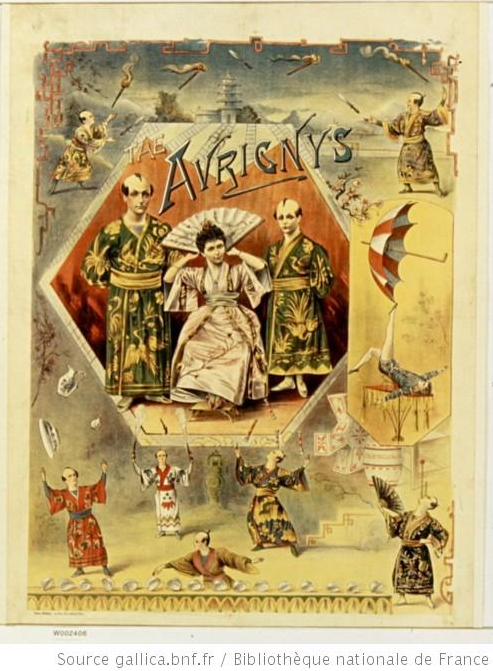
The Avrignys

umbrella2
Série aux Armes d'Epinal / par [Charles] Garnier[estampe] / [gravé par] P. Tempestini


umbrella3

Le Journal de la jeunesse. Nouveau recueil hebdomadaire illustré 1873/01-1873/06.


umbrella4

Si vous toussez prenez des pastilles Géraudel : [affiche] / [Jules Chéret]

umbrella5

[Planche parue dans "Le Cri de Paris", n° 2] : [estampe] / Félix Vallotton

umbrella6

Quinze contes picards / par le président Albert de Roucy ; ornés de dessins composés par Martial Lequeux ; [préface de Alexandre Sorel]

Author : Roucy, Albert de

Publisher : H. Lefebvre (Compiègne)

Date of publication : 1884

Contributor : Lequeux, Martial (18..-18..). Illustrateur

Contributor : Sorel, Alexandre (1826-1903). Préfacier

umbrella7

Série aux armes d'Epinal. N° 17, Histoires & scènes humoristiques, contes moraux, merveilleux. La rue à Paris : [estampe] / G. M.

umbrella8

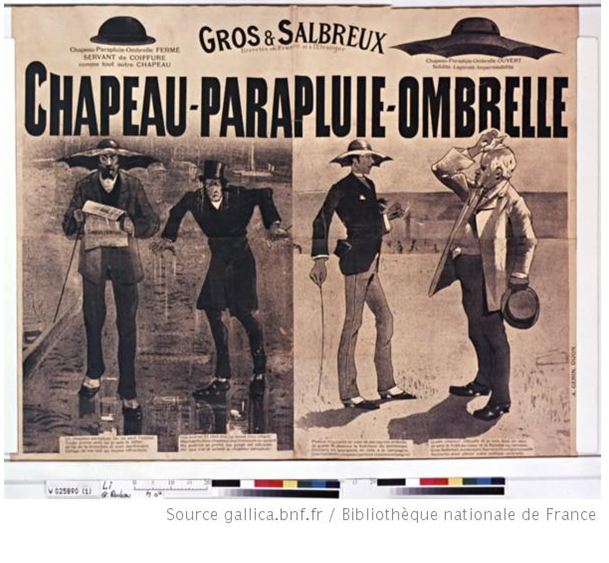
Gros et Salbreux. Chapeau-parapluie-Ombrelle... : [affiche] / [non identifié]

umbrella9

La Femme de France ["puis" et Mode et beauté]...

Publisher : [s.n.?] (Paris)

Date of publication : 1915-1938

umbrella10

Série aux armes d'Epinal. N° 360, Histoires & scènes humoristiques, contes moraux, merveilleux. Parapluie : monture africaine : [estampe] / Falco

Auteur : Falco, A. (18..-19.. ; illustrateur). Dessinateur de l'oeuvre reproduite

Éditeur : Imagerie Pellerin fondée en 1796 [Epinal, 1903]

Date d'édition : 1903

umbrella11

Sur une plage de Floride, jeunes filles se faisant porter par leur parapluie renversé formant un bateau et se servant d'un balai comme rame : [photographie de presse] / Acmé 1932

umbrella12

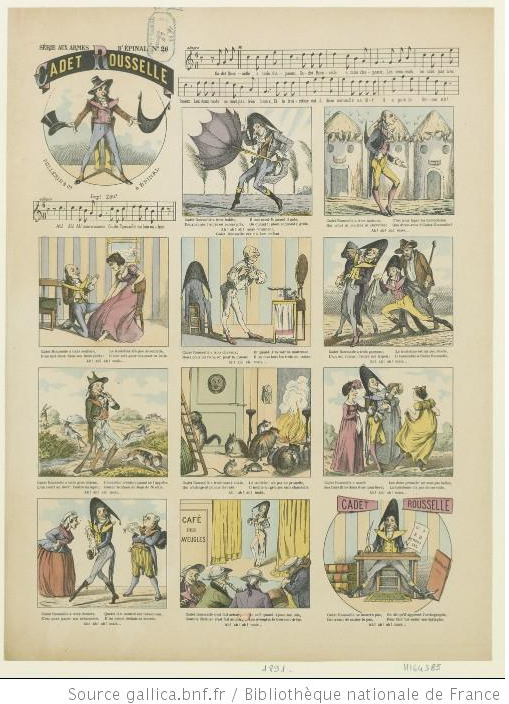
Série aux armes d'Epinal. N° 26, Cadet Rousselle :1891

umbrella13

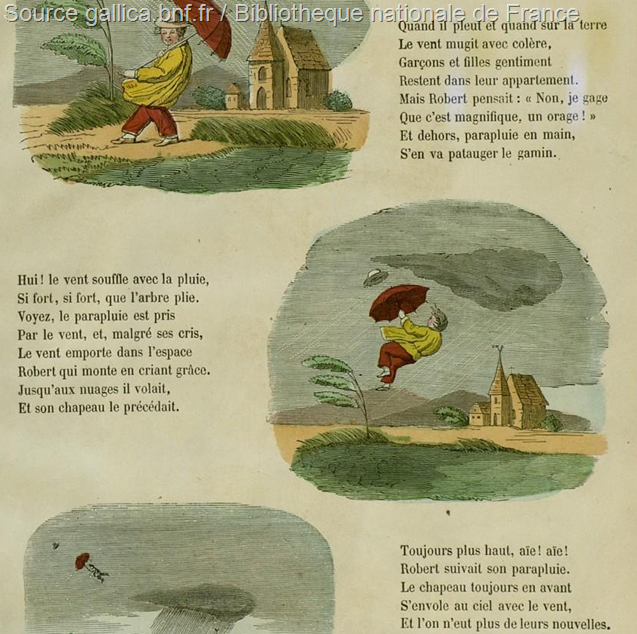
Pierre l'Ébouriffé, joyeuses histoires et images drôlatiques pour les enfants de 3 à 6 ans. Traduit de l'allemand du docteur Hoffmann sur la 360e édition par Trim

Author : Hoffmann, Heinrich (1809-1894)

1872

umbrella14

Nikou femme Bonze ou Religieuse Chinoise : [estampe] / A. Watteau pinx. ; Bouché Sculp.

Auteur : Boucher, François (1703-1770). Graveur

Auteur : Watteau, Antoine (1684-1721). Peintre du modèle

1731

umbrella15

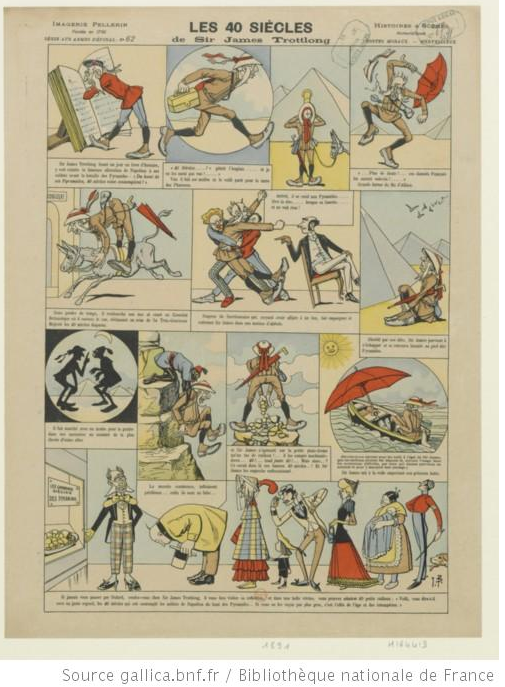
Série aux armes d'Epinal. N° 62, Histoires & scènes humoristiques, contes moraux, merveilleux. Les 40 siècles de Sir James Trottlong : [estampe] / J. B. 1891

Tuesday, November 30, 2010

Sandwiches and Toasts recipes from yesteryear

I was having a  look at a book 

BETTER MEALS FOR

LESS MONEY

BY

MARY GREEN

1917

I find the sandwiches and toasts section very appealing.

SANDWICHES AND TOASTS

448.—BAKED BEAN AND LETTUCE SANDWICHES

Press cold baked beans through a sieve; spread bread with butter, cover with a lettuce leaf, cover lettuce with beans, and sprinkle beans with chopped mustard pickle. Cover with a second piece of buttered bread. Brown bread or any dark bread may be used.

449.—CELERY AND EGG

1 cup chopped celery
¼ cup mayonnaise

1 hard-cooked egg

Put celery and egg through the food chopper, using finest cutter; add mayonnaise, and salt if necessary; spread between thin slices of buttered brown bread.

450.—CHEESE AND NUT SANDWICHES

Mix equal parts of grated American cheese and chopped nut meats; season with salt and cayenne, moisten with cream, and spread between thin buttered slices of bread.

451.—CHEESE CLUB SANDWICHES

Cut bread in half-inch slices, remove crusts, spread with Mustard Butter (see No. 459), cover with a lettuce leaf, spread with salad dressing, cover with cheese cut in thin slices, sprinkle with chopped mixed pickles, and cover[Pg 164] with a second slice of bread spread with mustard butter. Cut in quarters diagonally.

452.—CHICKEN SANDWICHES

1 cup finely chopped chicken
Dash of celery salt

½ teaspoon salt
¼ cup salad dressing

Dash of cayenne

Season the chicken, add the dressing, and beat well. Butter circles of white bread, and spread with the chicken, mounding it in the center. Garnish with slices of pimolas.

453.—GIBLET SANDWICHES

Cook giblets until tender, put through food chopper, and mix with salad dressing. Spread between thin slices of buttered bread. A lettuce leaf may be added.

454.—HAM AND CHEESE SANDWICH (Hot)

Spread thin buttered slices of stale bread with finely chopped ham; cover with thin slices of American cheese; cover with another slice of bread spread with ham, and sauté in a little butter until brown. These sandwiches may be toasted if preferred.

455.—MARSHMALLOW SANDWICHES

Toast marshmallows and press while hot between ginger snaps, vanilla wafers, or butter thins.

456.—MOCK CRAB SANDWICHES

1 cup young America cheese cut fine
1 teaspoon anchovy paste

3 tablespoons milk
½ teaspoon paprika

Mix cheese to a paste with milk, anchovy, and paprika; spread between thin buttered slices of brown bread.

457.—PEANUT SANDWICH FILLING

Put freshly roasted peanuts through the food chopper, using the finest cutter, season with salt, and mix to a smooth paste with cream; or dilute peanut butter with a little milk until of consistency to spread easily.

458.—RAISIN BREAD AND CHEESE SANDWICHES

Cut raisin bread in thin slices, and spread with Cottage Cheese (see No. 234) mixed to a paste with a little fruit juice or cream. Trim neatly and cut in triangles.

459.—MUSTARD BUTTER

¼ cup butter
A few drops of vinegar or lemon juice

1 teaspoon dry English mustard
A few grains of cayenne

Cream the butter, add the mustard and seasonings, and beat well.

460.—BREWIS

1 cup brown bread crumbled
1/8 teaspoon salt

1 cup white bread crumbled
1 tablespoon butter

1 cup milk

Put crumbled bread in a shallow pan in a slow oven until browned; put in a saucepan with milk, salt, and butter, and cook about ten minutes, beating well. Serve as cereal or dessert. Left-over corn bread or muffins may be used.

461.—BROWN BREAD TOAST WITH CHEESE AND BACON

Toast brown bread, or crisp in the oven, dip quickly into hot salted water, and arrange on serving dish. Make a Sauce for Cream Toast (see No. 464), add to it one-half cup of cheese cut fine, pour over toast, and put a piece of crisp bacon on each piece.

462.—CELERY TOAST

2 cups celery cut in half-inch pieces
1/3 cup flour

3 cups hot stock or water
¼ cup milk

Salt
6 slices toast

1/8 teaspoon pepper

Cook celery in stock or water about half an hour, or until tender; add salt (if necessary), pepper, and flour mixed to a paste with the milk; stir until thickened, and simmer fifteen minutes; pour over toast, and garnish with toast points and celery tips. Use the coarser unbleached pieces of celery for cooking.

463.—CREAM TOAST

Cut six slices of bread in halves, toast slowly, or put into a moderate oven until light brown and crisp, dip each piece into Sauce for Cream Toast (see No. 464), and put into a covered serving dish; pour over remaining sauce, and cover for two or three minutes before serving.

464.—SAUCE FOR CREAM TOAST

2 cups milk
½ teaspoon salt

3 tablespoons flour
1 tablespoon butter

¼ cup cold water

Scald the milk; mix the flour to a smooth paste with water, add to milk and stir until thickened; cook over hot water fifteen minutes, stirring occasionally; add salt and butter, and pour over toast.

465.—CHEESE TOAST

To recipe for Cream Toast (see No. 463) add one-half cup of either soft cheese cut fine or grated cheese.

466.—CINNAMON TOAST

Cut stale bread into thin slices, remove crusts, and cut in halves; toast evenly, and spread first with butter, then with honey, and dust with cinnamon. Serve very hot.

467.—FRENCH TOAST

1 egg slightly beaten
¾ cup milk or coffee

¼ teaspoon salt
4 slices bread

1 tablespoon sugar

Mix egg, salt, sugar, and liquid in a shallow dish; soak bread in mixture, and cook on a hot, greased griddle until brown, turning when half cooked. Serve plain or spread with jam.

468.—GOLDENROD HAM TOAST

Follow recipe for Cream Toast (see No. 463); to the sauce add one-half cup finely chopped ham and the finely chopped whites of two hard-cooked eggs. When toast is in the serving dish, sprinkle with the hard-cooked yolks rubbed through a sieve.

469.—SUNDAY TOAST

Cut whole wheat bread into four one-inch slices, remove crusts, butter, and cut bread into three strips; mix one-third cup of brown sugar, one teaspoon of cinnamon, two tablespoons of seeded and chopped raisins, and a tablespoon of milk; spread paste on bread, and bake in a hot oven until brown. Serve hot.[Pg 168]

470.—TOMATO CREAM TOAST WITH EGG

½ can tomato
1/3 cup cold water

1/3 teaspoon salt
2/3 cup hot milk

1/3 teaspoon soda
1 tablespoon butter

1 teaspoon sugar
2 hard-cooked eggs

4 tablespoons flour
6 slices toast

Simmer tomato for fifteen minutes and press through a sieve; add salt, soda, and sugar; heat to boiling point, and thicken with flour mixed to a smooth paste with cold water; cook five minutes, and add hot milk and butter. Dip toast in sauce, place on platter, cover with remaining sauce, and garnish with egg cut into eighths lengthwise.

471.—TO FRESHEN STALE LOAF BREAD, ROLLS, MUFFINS, OR DOUGHNUTS

Dip quickly into cold water, put in a paper bag, fold top of bag firmly, and place in a hot oven until heated through.

472.—BUTTERED CRUMBS

Melt two tablespoons of butter, stir in one-half cup of coarse, dried bread crumbs until butter is absorbed.

473.—CROUSTADES

Cut stale bread in slices about an inch and a half thick, remove crusts, and cut in rounds, squares, triangles, or any shape desired; remove the centers, using a small, sharp knife, and leaving a wall one-third of an inch thick; brush with melted butter, and brown in oven; or fry, inverted, in hot, deep fat.

474.—CROUTONS

Cut stale bread in one-third-inch slices, cut slices into cubes, and brown in the oven or fry in deep fat. Cold toast may be used instead of bread.

475.—CRISP STICKS

Cut stale bread in half-inch slices, remove crusts, spread lightly with butter, cut in half-inch sticks, and put in slow oven until light brown and crisp.

Saturday, November 6, 2010

Weekend Poll: What time do you belong to?

I was reading an article that speaks about Ditta Von Tyssen and I know the pinup style doesn’t fit me well. I mostly prefer the 20s , its fashion and the flapper era. But at times, I can also feel that I would why not could be living in the 1900s, those times filled with art, culture, expeditions and marvelous perfume creations.

So, I was thinking why not write about this as a poll? This is a great way to know your likes, what times you really love most and perhaps seeing these images those who wonder will finally get an idea of what times they really feel to fit in.

So here are some images, randomly selected. Just choose one (or two) that will let us know what times, what old and not so old times you really love.

I made a selection starting with the 1900s. I could go further back but perhaps this will be posted on another article, only to show a certain time, let’s say the Victorian and Edwardian era.

So, here are the pictures. Chose the one or two photos that make you feel good as if you were precisely in the photo.

Let’s start with 1800s


1900


1910s


1920s


1930s

(btw, she reminds me of Madonna)


1940s


1950s


1960s


1970s


1980s


Make your choice!


Image Credits:

Victorian Lady Preparing Her Bath ca. 1890s /Bettman

Woman Dress as Virgin Mary © Alinari Archives/ 1895 – 1900

French Ballet Dancer Wearing Feather Plume 1900-1910 © Alinari Archives

Model Alden Gay Wearing Cartier Jewelry 1924 © Condé Nast Archive

Woman in Satin Crepe Suit 1934 © Condé Nast Archive

Designer Charles James 1948 © Condé Nast Archive

Model Suzy Parker with flowers 1956 © Genevieve Naylor

1960s Woman Dancing In White Fringed Halter Top Mini-Dress Skirt And Go-Go Boots  April 21, 1965 © H. Armstrong Roberts/ClassicStock

Nan Kempner  ca. January 1974 © Condé Nast Archive

Marc Jacobs Runway Show Fall 1986 © Condé Nast Archive

Sunday, September 26, 2010

Vintage Circus


There is something nostalgic about the old circuses and their story. In many ways this is showed in “Freaks” but there are also other stories that perhaps could become a movie. For vintage circus lovers you can follow a page on Tumblr dedicated to circuses and their people, from unknown clowns to famous people who made their story during their lifetime and others who have transcended time.


Freaks


Released: 1932


Go to IMDb page

Information © IMDb.com


Freaks

Wallace Ford, Olga Baclanova, Henry Victor, Daisy Earles, Daisy Hilton, Schlitze,


I Love Vintage Forever | Creative Commons Attribution- Noncommercial License | Dandy Dandilion Designed by Simply Fabulous Blogger Templates